
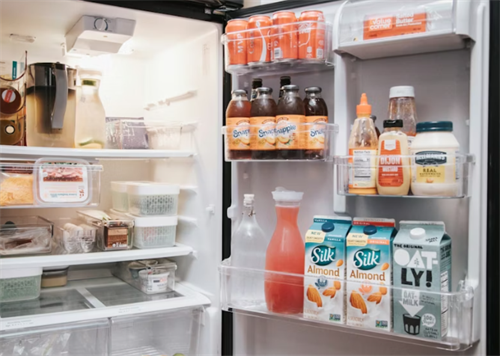
Keeping food safe at home is not just about cooking skills. It is about systems.For years, I believed I was careful. I washed vegetables. I cooked meat thoroughly. I kept leftovers in the refrigerator. Yet I still faced small but worrying issues: leftovers that spoiled too quickly, vegetables absorbing strange odors, and once, a mild stomach upset after reheating food that “looked fine.”
That experience forced me to rethink how I stored food at home.
What I discovered is this: preventing food contamination is less about occasional cleaning and more about designing a clear, structured storage system. In this guide, I will share the practical method I now use—separating fresh and cooked foods into defined zones and using proper fresh-keeping containers. This system is simple, realistic, and adaptable to households worldwide.
Why Food Cross-Contamination Is a Serious Household Risk?
Food contamination does not always happen in restaurants. It frequently happens at home.
According to the World Health Organization (WHO), an estimated 600 million people fall ill each year due to contaminated food [1]. The Centers for Disease Control and Prevention (CDC) estimates that 1 in 6 people in the United States experience foodborne illness annually [2].
While improper cooking is one factor, cross-contamination during storage is often overlooked.
Common household mistakes include:
Storing raw meat above cooked food;
Keeping leftovers uncovered;
Mixing fresh produce with raw animal products;
Reusing containers without proper cleaning;
Storing food at incorrect temperatures;
These are not rare errors. They are routine habits.
The problem is structural. Most households do not have a clear storage framework.
Understanding Cross-Contamination in Practical Terms
Cross-contamination occurs when harmful bacteria transfer from one food item to another. This often happens through:
Direct contact (raw meat touching cooked food);
Dripping fluids in the refrigerator;
Shared containers or utensils;
Improperly sealed leftovers;
Incorrect temperature zones;
The United States Department of Agriculture (USDA) emphasizes that raw meat juices are a primary source of contamination inside refrigerators [3].
Bacteria such as Salmonella and E. coli do not always change the smell or appearance of food. That is why relying on visual checks alone is unsafe.
This is where system design becomes essential.
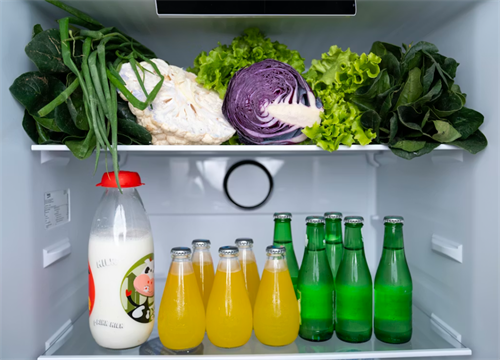
My Turning Point: Designing Separate Food Zones
After researching food safety recommendations and observing my own kitchen habits, I designed a simple rule:
Fresh foods and cooked foods must never share storage zones.
Instead of thinking about food randomly, I created three distinct categories:
Raw animal products;
Fresh produce;
Cooked or ready-to-eat foods;
Then I assigned each category its own physical zone.
This single change dramatically reduced confusion and improved food safety.
Step 1: Dividing the Refrigerator into Clear Zones
Most refrigerators already have natural sections. I reorganized mine like this:
Top Shelf – Cooked and Ready-to-Eat Foods
Leftovers;
Meal-prepped dishes;
Dairy;
Prepared sauces;
Cooked food goes on the highest shelf because it should never be exposed to dripping raw juices.
Middle Shelf – Fresh Produce (Washed and Dry)
Washed vegetables in containers;
Cut fruits;
Salad greens in breathable containers;
Bottom Shelf – Raw Animal Products
Raw meat;
Poultry;
Seafood;
I store raw animal products in sealed containers or leak-proof trays to prevent drips.
This structure follows food safety recommendations from the USDA [3] and aligns with WHO safe storage principles [1].
The key principle is gravity: anything that can drip must stay below ready-to-eat food.
Step 2: Creating Physical Barriers with Fresh-Keeping Containers
Separation is not only about shelf location. It is also about containment.
I stopped using open bowls and plastic wrap. Instead, I invested in:
Airtight glass containers;
Leak-proof raw meat trays;
Breathable produce containers;
Stackable modular containers;
Why glass? Because glass is non-porous and does not absorb odors. It is easier to sanitize compared to some plastics.
Research published by the Food and Agriculture Organization (FAO) highlights that proper food storage containers reduce bacterial transfer and moisture-related spoilage [4].
Containers serve two functions:
Prevent bacterial spread;
Maintain food quality;
Odor transfer alone can indicate airflow contamination inside refrigerators.
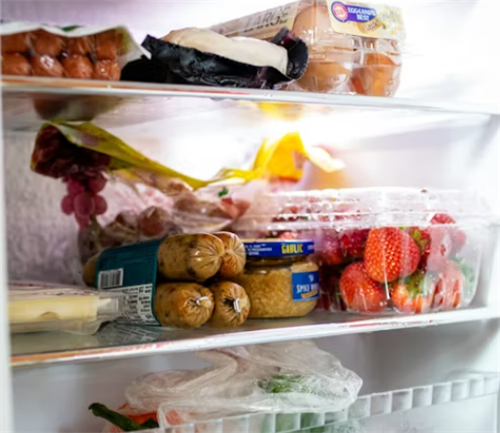
Step 3: Temperature Control as a Structural Element
Separation does not work without temperature discipline.
The CDC recommends keeping refrigerators at or below 40°F (4°C) [2].
I placed a refrigerator thermometer inside. Many built-in displays are inaccurate.
Here is my rule:
0–4°C (32–40°F): Refrigerator safe zone
-18°C (0°F): Freezer safe zone
Anything stored above 4°C increases bacterial growth risk.
Regular monitoring transformed my kitchen from “I think it’s cold enough” to data-based storage.
Step 4: The 48-Hour and 72-Hour Rule for Cooked Food
Even with proper storage, cooked food does not last indefinitely.
According to USDA guidance [3]:
Cooked leftovers should be eaten within 3–4 days.
Refrigeration slows but does not stop bacterial growth.
I personally use:
48-hour rule for seafood;
72-hour rule for cooked meat and grains;
Same-day rule for cut fruit;
Every container in my refrigerator now has a small date label.
This reduced food waste and increased accountability.
Step 5: Separate Cutting and Preparation Zones
Storage safety begins before food enters the refrigerator.
I implemented:
Separate cutting boards for raw meat and vegetables;
Immediate washing of knives after raw meat contact;
No mixing of cooked and raw utensils;
This aligns with WHO “Keep Clean” and “Separate Raw and Cooked” guidelines [1].
Cross-contamination often starts during preparation, not storage.
Step 6: Managing Fresh Produce Correctly
Fresh produce is often misunderstood.
I used to wash all vegetables immediately and place them in plastic bags. That caused premature spoilage.
Now I:
Wash leafy greens, then dry completely before storing;
Store herbs upright in breathable containers;
Keep ethylene-producing fruits (like apples) separate from greens;
FAO reports that moisture control significantly reduces microbial growth and spoilage [4].
The goal is balance: clean, dry, breathable.
A Practical Application
In 2023, a neighbor in my community experienced recurring stomach issues after family meals. After reviewing her storage habits, we found:
Raw chicken stored above leftover rice;
Cooked food loosely covered;
Refrigerator temperature at 7°C (44.6°F);
After reorganizing her refrigerator into zoned sections and adjusting the temperature, incidents stopped.
This is not a scientific trial, but it reflects a common pattern: systems matter more than intentions.
Why Separate Zones Reduce Mental Load?
Beyond safety, zoned storage improves efficiency.
Benefits I experienced:
Faster meal preparation;
Reduced duplicate purchases;
Lower food waste;
Easier cleaning;
A structured refrigerator is easier to audit weekly.
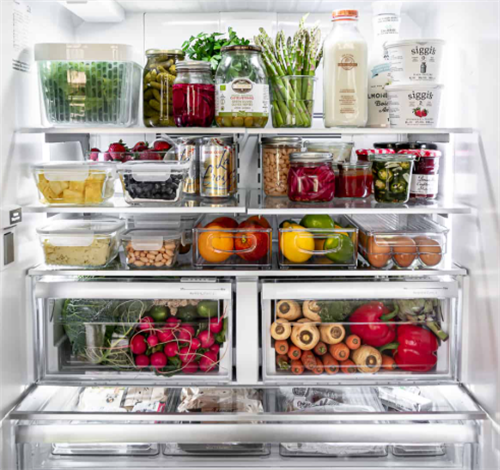
A Global Perspective on Household Food Safety
Food safety risks are not limited to one country.
WHO emphasizes that safe food handling practices are essential globally, especially in urban households where refrigeration is standard [1].
In lower-resource settings, separation may mean:
Using different covered containers;
Storing cooked food higher than raw;
Using physical dividers;
The principle is universal: separation and containment.
Common Mistakes I Stopped Making:
Storing hot food directly in the refrigerator;
Leaving leftovers uncovered;
Placing raw meat on upper shelves;
Ignoring refrigerator temperature;
Overcrowding shelves;
Overcrowding blocks airflow and creates uneven cooling zones.
My Weekly Food Safety Checklist:
Every Sunday I:
Check refrigerator temperature;
Discard expired leftovers;
Clean bottom shelf;
Sanitize containers;
Review produce freshness;
This takes 15 minutes and prevents larger issues.
Container Selection Guide (Practical List)
When choosing containers, I recommend:
Tempered glass with airtight lids;
BPA-free plastic for dry goods;
Stainless steel for freezer storage;
Transparent design for visibility;
Stackable structure;
Avoid cracked lids and warped seals.
Containers are not decoration. They are safety tools.
Financial Impact: Reducing Waste
The FAO estimates that roughly one-third of food produced globally is lost or wasted [4].
Poor storage contributes significantly.
Since adopting zone-based storage, I reduced my household food waste by approximately 20% (based on monthly grocery tracking).
Safety and savings go together.
Final System Summary
Here is my complete structure:
Refrigerator Layout
Top: Cooked food
Middle: Produce
Bottom: Raw meat (sealed)
Temperature
≤ 4°C refrigerator
-18°C freezer
Time Rules
48–72 hour leftover limit
Label everything
Preparation
Separate cutting boards
Immediate washing
Weekly Audit
Clean and reset zones
This system is simple, repeatable, and adaptable worldwide.
Why This Method Works
Because it combines:
Physical separation;
Structural temperature control;
Time management;
Behavioral consistency;
It transforms food safety from guesswork into process.
Conclusion: Food Safety Is a Design Choice
I used to think food safety was about being careful.
Now I know it is about building systems.
Separate zones. Proper containers. Temperature discipline. Clear timelines.
These are not complicated steps. But together, they create a safe and efficient kitchen environment.
If you manage a household, this method will protect your health, reduce waste, and simplify your daily routine.
Food safety is not a luxury. It is a life skill.
References:
[1] World Health Organization. (2022). Food safety fact sheet. https://www.who.int/news-room/fact-sheets/detail/food-safety
[2] Centers for Disease Control and Prevention. (2023). Estimates of foodborne illness in the United States. https://www.cdc.gov/foodborneburden/index.html
[3] United States Department of Agriculture. (2024). Refrigeration and food safety. https://www.fsis.usda.gov/food-safety
[4] Food and Agriculture Organization. (2023). The State of Food and Agriculture. https://www.fao.org
About the Author:
Ethan Caldwell is a household systems researcher and certified food safety educator with over 12 years of experience studying domestic risk management and practical life organization. He has collaborated with community education programs focused on home hygiene, cross-contamination prevention, and efficient kitchen systems. His work emphasizes translating public health guidelines into actionable routines that families worldwide can adopt. Ethan specializes in creating structured, evidence-based household systems that align with international food safety standards and behavioral science principles.
Disclaimer:
This article is for educational purposes only and is not a substitute for professional medical or public health advice. Always follow official food safety regulations in your country and consult qualified professionals regarding specific health concerns.
Recommend:
Small Space Kitchen Bliss: My "Vertical Storage" Method, Even the Side of the Refrigerator Was Not Left Unattended

The 1+3 Drink Rule: How I Host Gatherings Without Bartending

How I Learned to Let Go of Family Heirlooms: An Emotional & Practical Guide

Windows-Free Damp Bathroom Fixed: My Journey in Creating a “Dry Storage” System