
Moving into your first apartment is an exciting milestone, but it comes with the responsibility of turning an empty space into a functional, comfortable home. Standing in an empty living room, I remember feeling both exhilarated and overwhelmed — four walls, one window, and the echo of my own footsteps. Questions immediately surfaced: What should I buy first? How much is my budget? Where do I start?
1. Pre-Move Financial Reality Check: Hidden Costs and Budgeting
1.1 The True Cost Beyond Rent
Many first-time renters make the mistake of focusing solely on rent. After paying the first month and a deposit, leftover funds for furnishing the apartment are often minimal. For instance, I once had only $400 for my entire apartment setup, forcing me to use a suitcase as a closet and takeout boxes as plates for two weeks.
Data Snapshot (Zillow, 2025):
Average first-month rent: $2,100
Security deposit: $750
Application fee: $50 per application
Tenant insurance: $23/month
Practical Formula for First Move-in Cost:
Total Moving-In Cost = First Month Rent + Deposit + Application Fee + $1,000 (basic configuration) + 3 months’ rent (emergency reserve)
Financial experts recommend saving at least three months’ rent as an emergency buffer.
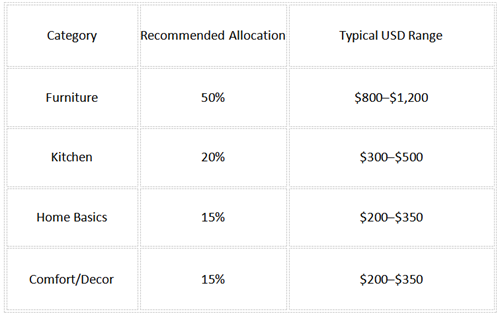
1.2 Allocate Your Furnishing Budget
Based on lessons from moving four times and helping friends, I recommend dividing the furnishing budget as follows:
2. Three-Stage Procurement Method: Prioritizing the Purchase Order
Purchasing household items is not just about what you buy, but when. My method minimizes impulsive spending, ensures essentials are covered first, and helps gradually personalize the home.
2.1 Phase 1 – First Week: “Survival Mode”
Objective: Cover basic sleeping, eating, and hygiene needs.
Original Case: On my second move, I spent roughly $643 on a medium-quality mattress ($400), simple bed frame ($80), cookware ($60), bedding ($50), and basic bathroom essentials. Takeout boxes were temporarily used as dishes — uncomfortable but functional.
Essential First-Week Items:
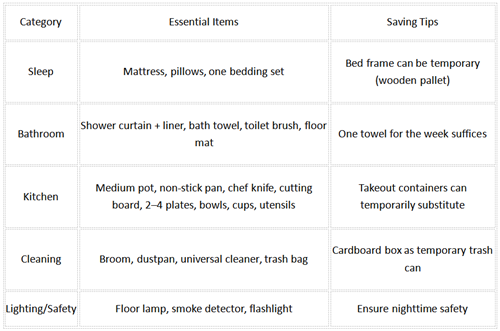
Critical Advice: Never buy a second-hand mattress — risk of bedbugs is high.
2.2 Phase 2 – First Month: “Function Establishment”
After survival needs, identify pain points from daily activities to determine additional purchases.
Common Needs:
Kitchen supplements: mixing bowls, food storage boxes, baking trays, basic seasonings
Storage: hangers (anti-slip recommended), simple wardrobe, shoe racks
Convenience: electric kettle, trash bin, laundry basket
Cleaning upgrade: mop or vacuum (refurbished options can save money)
Lighting: bedside lamp, desk lamp
Data Insight: 78% of first-time renters now consider a microwave or toaster as necessary, up from 45% in 2010.
Original Case: A friend realized she frequently used the oven but lacked a toaster ($25) and needed a second pot ($20). She avoided impulse purchases and improved daily life significantly.
2.3 Phase 3 – First Three Months: “Personalization”
Now you know your habits and your space. Begin adding items that turn a house into a home.
Tips:
Determine style preferences via Pinterest or furniture stores.
Measure space to avoid ill-fitting furniture.
Add items gradually.
Examples of Later Purchases:
Wall art, decorative paintings;
Extra pillows and blankets;
Formal dining table (if needed);
Guest amenities;
Original Lesson: I bought decorations too early; many didn’t match my style or fit the space, wasting over $200.

3. Smart Spending: Where to Invest and Save
3.1 Items Worth Investing
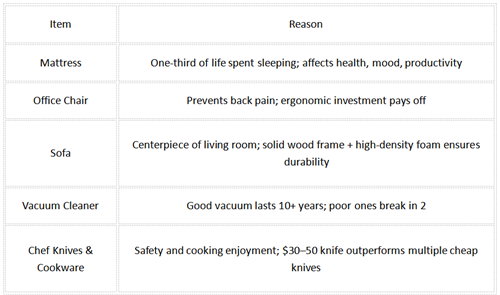
3.2 Items to Save On
Bed frame: functional metal/wood frame suffices
Dining table/chairs: second-hand options fine ($50–$100)
Tableware: affordable sets ($20–$30 for 4)
Decorations: posters, souvenirs, DIY items
Basic tools: $15–$20 toolkit covers most assembly/repairs
Second-hand Market Guidance:
Safe: bookcases, tables, floor lamps, mirrors, desks
Avoid: mattresses, fabric sofas, electronics, knives
Inspect carefully: size, damage, functionality
4. Kitchen Appliances: The Heart of the Home
The kitchen is central to family life. Appliance choice should prioritize cleanliness, aesthetics, integration, and intelligence.
4.1 Cleanliness
Surfaces: metal, hard plastic, glass — easy to wipe
Self-cleaning features: steam ovens, dishwashers
Case Example: Huadi Clean³ integrated cooking center with self-cleaning and air purification
4.2 Aesthetics & Integration
Small kitchens (<10 m²) require integrated or multifunctional appliances
Avoid excessive, rarely used gadgets
Popular styles: Nordic, minimalist, Japanese, New Chinese
Integrated cooking centers growing rapidly (AVC 2023: +286% online sales H1 2023)
4.3 Intelligence & Ease of Use
Smart tech simplifies cooking but can be complex
Ensure ergonomic, intuitive interfaces
Key metrics for range hoods: airflow (m³/min) and pressure (Pa) for effective smoke removal
Lesson: A perfect kitchen balances functionality, cleanliness, and love for cooking — appliances alone cannot make a home.
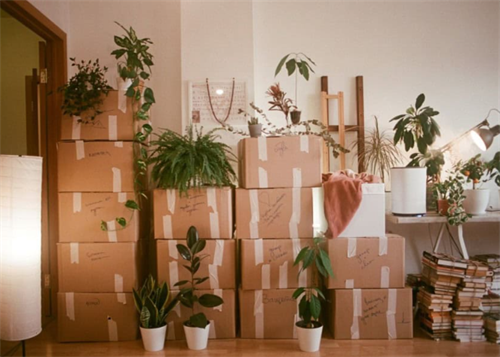
5. Detailed Purchase Order Checklist (90 Days)
Pre-Move Preparations:
Measure rooms, doors, windows;
Confirm existing items;
Set overall and per-stage budget;
Arrange utilities (broadband, water, gas);
Week 1: Survival Core
Sleeping: mattress, bed frame, pillows, bedding
Bathroom: shower curtain, towels, toilet brush, toiletries
Kitchen: pot, pan, chef knife, cutting board, dishes, utensils, soap
Cleaning: broom, dustpan, trash can, cleaner
Lighting/Safety: floor/table lamp, smoke alarm, first aid kit, flashlight
Weeks 2–4: Function Setup
Vacuum/mop;
Electric kettle/coffee maker;
Food storage, bowls, baking trays;
Spice racks, hangers, wardrobe, shoe rack;
Extra bedding/towels, mirrors;
Weeks 5–12: Comfort Upgrade
Sofa/lounge chair, coffee table
Dining table/chairs
Office desk + ergonomic chair
Curtains, floor mats, decorations
Tool kit, backup smoke alarm batteries, small fire extinguisher
Room-specific Essentials:
Entrance Hall: coat rack, shoe storage, mirror, mat
Living Room: sofa, TV, rugs, shelves, plants, throw pillows
Kitchen: cookware, tableware, utensils, cleaning tools
Bathroom: towels, toiletries, laundry items
Balcony/Laundry: detergent, hangers, drying rack, plant care items
6. Case Study: Balanced 90-Day Setup
David & Maria, Atlanta
Budget: $4,000
Essentials: $1,620 (saved via bundles)
Appliances: $980 (open-box fridge)
Comfort: $730 (upgraded sofa)
Enhancements: $450
Outcome: Fully functional, comfortable home within 9 weeks; saved $220, avoided impulsive spending.
7. Sustaining Your Home
Track lifetime costs: replacement, energy, maintenance
Plan seasonal purchases early: winter bedding, spring outdoor furniture
Upgrade gradually to balance comfort, aesthetics, and budget
References:
[1] Bureau of Labor Statistics. (2024). Consumer Expenditure Survey Reports: Household Spending on Furniture and Household Equipment. https://www.bls.gov/cex/home.htm
[2] Zillow. (2025). Rental Housing Survey Report. https://www.zillow.com/research/
[3] Energy Information Administration. (2023). Appliance Energy Efficiency & Consumption Trends. https://www.eia.gov
[4] AVC. (2023). Integrated Cooking Center Market Report H1 2023. https://www.avccloud.com
[5] National Fire Protection Association. (2023). Smoke Alarms and Fire Safety Statistics. https://www.nfpa.org
About the Author:
Christopher Lee is a Certified Financial Educator (CFE) and Home Management Specialist with over a decade of experience advising adults on life skills, budgeting, and household planning. With professional certifications in Personal Finance (CFP®) and Adult Education, he has helped hundreds of first-time apartment owners establish functional, comfortable homes while building financial resilience. Drawing from personal experience and evidence-based research, Christopher provides practical, actionable guidance to empower adults to manage their daily lives effectively. He holds a Master’s degree in Human Development and continues to consult on financial literacy programs across the U.S.
Disclaimer:
This article is educational and not financial advice. Individual circumstances vary. Consult a financial advisor before making major purchases. Data and cases cited are for illustrative purposes.
Recommend:

Safety Checklist for Solo Women: My Proven Home Security Habits and Devices
My "Empty Counter" Kitchen Organization Method, Still Tidy After 6 Months
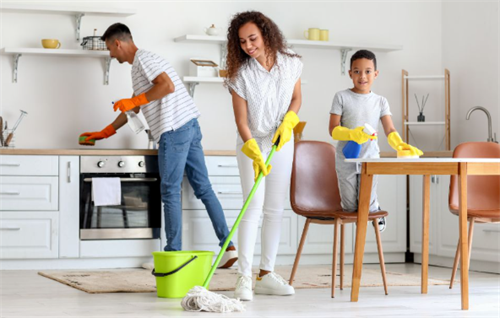
Our Family’s “Spring Cleaning” Checklist (Practiced for 3 Years) — And Why It Finally Works
3 Affordable Methods I Use to Teach My 5-Year-Old Child to Put Toys Back