Five years ago, I began living alone. The transition brought freedom, but also responsibility—for my safety and well-being. Over the years, I have installed smart security systems and developed over a dozen habits that operate automatically, creating a sense of control in my home. More importantly, I have learned to distinguish real fear from imagined danger and to respond logically using tools and habits.
According to the United Nations Office on Drugs and Crime (UNODC, 2025), 83,000 women worldwide were intentionally killed in 2024, nearly 50,000 by intimate partners or family members [1]. Women are 2.25 times more likely than men to experience interpersonal violence at home. These numbers highlight an essential truth: fear is real, but it can be managed. This article shares the home security devices and daily habits I use, forming my “peace of mind checklist.”
I. Core Concept: Layered Defense
When I first began equipping my apartment, I assumed a single smart lock would suffice. A friend in the security industry corrected me:
“Security is not a single line of defense—it is a multi-layered system.”
I adopted a four-layer defense model:
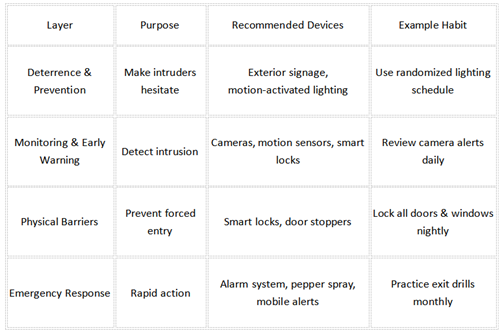
Each layer is essential. A smart lock without monitoring, or alarms without emergency response plans, leaves gaps in protection.
II. Essential Hardware: Devices That Make Me Feel Safe
2.1 Smart Lock: My First Line of Defense
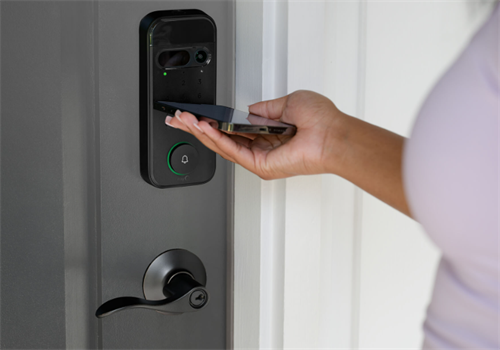
I chose a smart lock with AI human-form recognition and a peephole. It allows me to verify visitors without opening the door.
Case Example: On a weekend in 2023, someone knocked claiming to inspect the gas. Using the smart lock screen, I noticed they wore casual clothing and lacked ID. I requested verification, and they hesitated before leaving. Later, the gas company confirmed no inspections were scheduled.
Tips:
Choose locks with AI recognition and night vision.
Enable stay alarms if someone lingers too long.
Use voice-altering calls if needed; a male-voice setting has occasionally deterred strangers.
Example Device: Aqara Video Doorbell G410 – 2K clarity, AI recognition.
2.2 Smart Camera: My “Third Eye”
A corner camera covering my entrance and main living space provides reassurance, even if privacy concerns initially worried me.
Example: While on a business trip last year, I received a movement alert. The live feed showed my cleaning lady had arrived early. I contacted her remotely to reschedule, avoiding unnecessary anxiety.
Key Features:
Minimum 2K resolution with night vision
Cloud storage and playback
Privacy mode for when you are home
2.3 Window and Door Sensors: Invisible Guardians
Small sensors detect unauthorized openings and trigger alerts and sirens.
Example: One night, a strong wind triggered a window sensor. I rushed to check and found the window slightly ajar. Even a false alarm is a reminder the system is active and protective.
Practical Points:
Attach to all accessible doors and windows
Link alerts to your smartphone for real-time notifications
2.4 Door Stopper: Simple, Effective, Reliable
Before bed, I place a door stopper under the door. Tests show it resists over 400 kg of force. I also carry a portable stopper during travel.
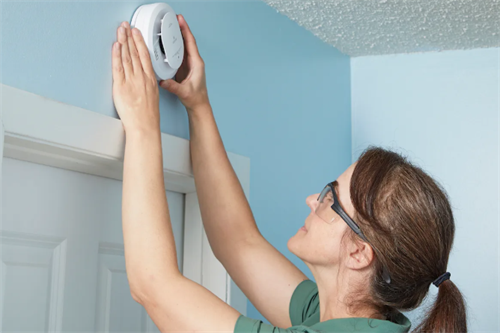
2.5 Smoke, Gas, and Water Sensors: Protection Against Invisible Hazards
Example: In 2024, a burst washing machine pipe triggered my water sensor. I remotely cut off the supply, preventing major damage.
Recommendation: Sensors cost around $20 each but guard against costly disasters.
2.6 Personal Self-Defense Tools
Pepper Spray (SABRE Shark certified)–carried in my bag
High-decibel keychain alarm–130 dB
High-intensity flashlight–temporarily blinds an attacker
Tip: Regularly check expiration dates and practice safe usage.
III. Daily Habits That Reinforce Safety
3.1 Manage Your Information Like an “Invisibility Spell”
Use pseudonyms for deliveries; avoid revealing apartment numbers;
Destroy delivery slips immediately;
Limit social media check-ins and geotagging;
Data insight: 36% of women found seeking help “difficult or very difficult” (Pew Research, 2023) [2]. Keeping personal routines private reduces risk and anxiety.
3.2 Create the Illusion of Occupancy
Randomized smart lighting;
Place men’s slippers or jackets to deter visitors;
Pets contribute to the perception of activity;
Example: A door-to-door salesman assumed someone else was home and left.
3.3 Reverse Pattern of Home Routes
Insight: Only 27% of women feel safe in public spaces after dark in Northern Ireland (2025) [3].
Habits:
Avoid fixed arrival times;
Prepare keys in advance;
Inspect surroundings before entering;
Share rideshare itineraries with friends;
3.4 Build a Neighborhood Network
Exchange contact info with neighbors;
Agree on mutual assistance in unusual situations;
Case Example: When my access card expired and phone battery died, a neighbor helped me enter safely.
3.5 Psychological Preparation: Trust Your Intuition
Uneasy feelings are warning signals;
Participate in self-defense courses;
Conduct mental simulation drills for emergencies;
Evidence: Women often survive home violence with minor injuries if they react quickly (Malawi study, 2023) [4].
IV. Advanced Safety: Balancing Freedom and Security
4.1 Technology Boundaries
Cameras cover public areas, not private spaces;
Regularly update passwords;
Choose brands with strong privacy practices;
Insight: Online tracking and image sharing can increase offline violence risk [1].
4.2 Dynamic Security Levels
Stage
Measures
Suggested Equipment
Newly single/renting
Basic access control & habits
Door stopper, sensors, pepper spray
Stable residence
Comprehensive protection
Smart lock, cameras, multiple sensors
Business travel
Portable protection
Travel door stopper, alarm, share itinerary
4.3 Sense of Control: The Ultimate Form of Safety
Insight: 99% of Chinese residents feel safe when alone at home (2024) [5]. True security is measured by reduced anxiety, not just rare-event prevention.
When I no longer fear returning home, I can focus on work, hobbies, and enjoying life.

V. Practical Tips: Everyday Precautions
Choose gated communities with 24-hour security;
Avoid sharing housing with others;
Inspect surroundings before unlocking doors;
Handle deliveries with care;
Install door stoppers and anti-theft chains;
Verify identity of service personnel;
Limit public display of wealth on social media;
Install alarm systems and cameras;
Verify rideshare details;
Ignore suspicious noises; do not open the door;
Maintain home appearance that deters intruders;
Carry alarms when walking alone at night;
Leave bathroom doors slightly ajar;
Turn off gas valves before sleep;
Takeaway: Safety is awareness, habits, and smart devices. Start small, and layer protection over time.
Conclusion: Peace of Mind Is a Skill
Five years ago, I worried endlessly about intruders. Today, I understand safety is a choice, built through devices, habits, and trust in data rather than fear. By cultivating awareness, installing smart tools, and maintaining practical routines, solo women can create a safe and empowering home environment.
References:
[1] United Nations Office on Drugs and Crime. (2025). Global study on homicide: Women victims of intentional homicide 2024. https://www.unodc.org/unodc/en/data-and-analysis/global-study-on-homicide.html
[2] Pew Research Center. (2023). Safety and personal privacy: Women living alone. https://www.pewresearch.org
[3] Northern Ireland Government. (2025). Safety perception in public spaces by gender. https://www.nidirect.gov.uk/public-safety-reports
[4] Malawi Ministry of Gender, Children and Social Welfare. (2023). Domestic violence response and injury outcomes. https://www.malawi.gov.mw
[5] China Public Security Bureau. (2024). Resident security perception survey report. http://www.mps.gov.cn/safety-survey-2024
Author Bio
Sarah Jenkins is an independent researcher and writer in home security and life management. She holds a background in sociology and over 8 years of practical experience living alone. Sarah has FEMA CERT certification and has written for Safe Life magazine. She specializes in creating actionable, evidence-based safety systems for solo women. She lives in Chicago, USA, with her cat, and continuously upgrades her smart home security setup.
Disclaimer
This article is for educational purposes only. Safety measures and devices described reduce risks but do not guarantee complete protection. Readers should assess individual circumstances and local laws before implementation.
Recommend:
Our Family’s “Spring Cleaning” Checklist (Practiced for 3 Years) — And Why It Finally Works
Hands on Comparison: Hangers vs. Folding —The Ultimate Guide to Storing Clothes by Fabric Type

The 1+3 Drink Rule: How I Host Gatherings Without Bartending

How I Built an Emergency Food Reserve (Without Creating Waste)?