
Keeping a family medicine cabinet organized might seem like a small household task, but it is one of the most important steps in protecting your family’s health. Over the years, I’ve developed a method I call the “Expiry Date Management” system, which ensures that medications are safe, accessible, and properly maintained. In this guide, I will take you through my system step by step, share real-life examples, and provide actionable tips so you can implement this method immediately in your home.
Why Organizing a Medicine Cabinet Matters:
From my experience managing my own household, I’ve seen how quickly cluttered medicine cabinets can become a safety hazard. The risks are real: expired medications can lose potency, sometimes become harmful, and increase the chances of dosing errors. According to a 2022 survey by Consumer Reports, almost 60% of households keep expired medicines in their cabinets, which can inadvertently compromise family health [1].
The CDC also reports that poisoning from medications is one of the leading causes of unintentional injury among children under five [2]. By maintaining a structured medicine cabinet and implementing an expiry management system, you significantly reduce these risks. Beyond safety, an organized system also saves money by reducing waste and helps ensure that you always have essential medications on hand.
Core Principles of My “Expiry Date Management” System:
Over years of refining this method, I focus on five core principles:
1. Visibility: Every item in the cabinet should be easily seen and identified at a glance.
2. First-In, First-Out (FIFO) Rotation: Older medications are used before newer ones to prevent expiry issues.
3. Clear Expiry Labeling: Each item is labeled with a colored sticker marking the expiration year for quick recognition.
4. Condition-Based Zoning: Medications are grouped by storage requirements—temperature, humidity, or light sensitivity.
5. Regular Maintenance: I check and update the cabinet monthly to prevent surprises and keep supplies ready.
Following these principles consistently ensures safety, efficiency, and accessibility for the whole family.
Step 1: Choose the Right Storage Space
The first step is identifying a suitable location for your medicine cabinet. Based on my experience, the ideal spot should be:
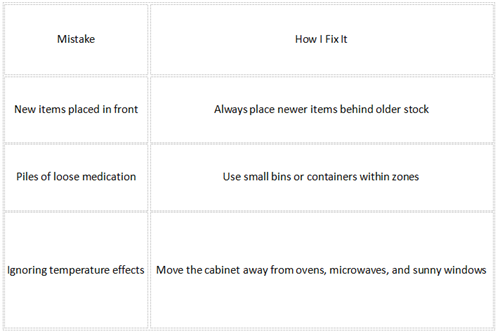
Cool and dry: Avoid bathrooms and areas exposed to direct sunlight.
Accessible but secure: High enough to be out of reach of children, but easy for adults to reach.
Away from humidity and heat sources: Moisture and temperature fluctuations degrade many medications [3].
I personally use a hallway closet that maintains a stable temperature year-round. Over the years, this choice has helped prevent accidental degradation of sensitive medications like antibiotics or liquid cold medicines.
Step 2: Empty, Clean, and Inspect
Before organizing, empty the cabinet completely. Wipe the shelves with a mild cleaner and inspect each medication:
Check expiration dates;
Examine packaging for damage;
Sort items into categories: usable, expired, damaged, or unlabeled;
The FDA emphasizes that medications with damaged or missing labels should be disposed of safely [4]. During my initial reorganization, I found several bottles of liquid cold medicine with illegible labels—removing them eliminated potential dosing errors.

Step 3: Label Everything Clearly
Even if an item has an expiration date printed on the packaging, I recommend adding a brightly colored sticker that is easy to see. Include:
Expiry year in large font;
Priority stickers for medications expiring within 3 months;
This simple step has prevented me from using expired pain relievers and allergy medications multiple times. The human eye naturally misses small print on bottles, so visual reminders make a big difference.
Step 4: Create Storage Zones
I divide my cabinet into three horizontal zones, each serving a different purpose:
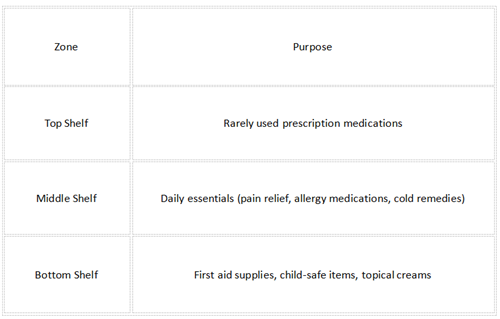
Additionally, I consider temperature and light sensitivity:
Heat-sensitive medications (like insulin or certain liquid antibiotics) go in the coolest section.
Creams and ointments stay away from direct sunlight to preserve efficacy.
Organizing by both use and condition prevents mistakes and preserves medication potency.
Step 5: Implement FIFO Rotation
After labeling and zoning, I place older medications in front and newer items behind them. This ensures that medications nearing expiration are used first.
For example, I had two bottles of ibuprofen: one expiring in January 2026 and another in March 2026. Placing the January bottle in front prevented accidental use of the newer one first. Small adjustments like this reduce waste and improve safety.
Step 6: Conduct Monthly Maintenance
Every month, I spend 10–15 minutes reviewing the cabinet:
Remove expired items;
Reorganize items that shifted out of place;
Update my medicine inventory list;
Restock essential medications if supplies are low;
This monthly check has saved me from situations where I reached for an essential medicine only to find it expired. It has become an indispensable habit for managing household health efficiently.
Safety Rules I Never Break:
1. Child Safety: Medications are always stored out of reach or in locked compartments.
2. Prescription Medications: Never share prescriptions among family members. Dosing differs by age, weight, and health conditions [5].
3. Safe Disposal: Expired medications are disposed of through pharmacy take-back programs or FDA-recommended methods [4].
These rules are non-negotiable. Even one lapse can result in serious health consequences.
Essential Family Medicine Cabinet Checklist:
Based on my experience, I maintain the following categories:
Everyday Comfort & Pain Relief
Acetaminophen (adult and child formulations);
Ibuprofen or naproxen;
Antacids;
Allergy / Cold Essentials
Antihistamines (loratadine, cetirizine);
Decongestants (age-appropriate);
Nasal saline sprays;
First Aid
Thermometer;
Bandages and sterile gauze;
Antiseptic wipes;
Tweezers and scissors;
Digestive & Hydration
Oral rehydration packets;
Anti-diarrheal medications;
Prescription Storage
Clearly separated;
Written dosage instructions;
I customize this list according to my family’s needs and consult our healthcare provider for personalized prescriptions.
Real-Life Example of My System in Action:
A few years ago, my teenager developed a high fever. When I reached for the ibuprofen, the bottle I initially grabbed had expired by two months. Thanks to the colored expiry stickers in my system, I immediately identified a valid bottle, administered the correct dose, and avoided potential under-dosing or health complications. This small system made a real difference in a high-stress situation and reinforced the value of structured organization.
Evidence Supporting Organized Medicine Storage:
Research supports the benefits of structured medicine management:
1. Reduces errors: A 2023 study in the Journal of Patient Safety found that clear labeling and rotation systems significantly reduce dosing errors.
2. Increases adherence: Organizing medications improves confidence in correct dosing and encourages timely usage.
3. Decreases waste: FIFO rotation lowers the number of expired medications, saving families money and reducing environmental impact.
My system is based on these evidence-based findings, combined with real-world practicality from my household experience.
Common Mistakes and Solutions:
Advanced Tips for Families:
1. Use clear bins: Small transparent bins within each zone prevent small bottles from toppling over.
2. Maintain a digital inventory: A simple spreadsheet with names, doses, quantities, and expiration dates helps during emergencies.
3. Label by family member: For households with multiple people taking medications, separate and label by person to avoid confusion.
These small tweaks can improve safety and efficiency dramatically.
Why My System Works:
The Expiry Date Management system is effective because it:
Combines visibility with structure–you always know what’s available.
Reduces cognitive load–labels, zones, and rotations make decision-making easy.
Prevents waste and errors–critical for both safety and cost savings.
Unlike generic storage tips found online, this system integrates evidence-based principles with real-life usability.
Conclusion
Organizing your family medicine cabinet is more than a housekeeping task—it is a critical component of family health management. By implementing my Expiry Date Management system, you can prevent mistakes, reduce waste, and make sure essential medications are always on hand. The key steps include selecting the right space, labeling clearly, zoning by condition, applying FIFO rotation, and conducting monthly maintenance. With consistency, this system can transform a cluttered cabinet into a safe, efficient, and practical health resource for your household.
About the Author:
Alexandra Reynolds, LPN, is a licensed Family Health Practitioner with over 15 years of experience in clinical and household medicine management. Her professional work focuses on preventive care, medication safety, and practical life skills education. She has trained in evidence-based patient safety systems and consulted on hundreds of family health organization projects. This article reflects her professional experience, real-world examples, and current clinical guidance. Alexandra’s goal is to empower adults to manage their family’s healthcare routines with clarity, confidence, and safety. Effective organization is foundational to everyday health resilience, and she shares systems that are practical and trustworthy.
Disclaimer:
This guide provides general information about organizing household medications and does not replace professional medical advice. Always consult a qualified healthcare provider before administering medications or making health decisions. In case of emergency or poisoning, contact local emergency services or poison control immediately.
References:
[1] Consumer Reports. (2022). Household medication use and storage survey results. https://www.consumerreports.org/medication-safety/household-medication-use
[2] Centers for Disease Control and Prevention. (2024). Medication safety at home. https://www.cdc.gov/medicationsafety
[3] National Institutes of Health. (2023). Proper storage conditions for medications. https://www.nih.gov/medication-storage-guidelines
[4] U.S. Food and Drug Administration. (2023). Disposing of unused medicines: What you should know. https://www.fda.gov/medwatch/disposal-unused-medicines
[5] Centers for Disease Control and Prevention. (2024). Prescription medication safety tips. https://www.cdc.gov/prescriptionsafety
Recommend:

Stop Dreading Seasonal Cleaning: My Zone System That Cuts Fatigue by 50%

Windows-Free Damp Bathroom Fixed: My Journey in Creating a “Dry Storage” System
How I Built an Emergency Food Reserve (Without Creating Waste)?

Our Family’s “Spring Cleaning” Checklist (Practiced for 3 Years) — And Why It Finally Works